FREEDMEN UNIVERSITY
Lineage Heritage Delineation
Power is The Ability to Define Phenomena and Make it Act in a Desired Manner. - Huey P. Newton
W. A .W.G
Great Statesmen
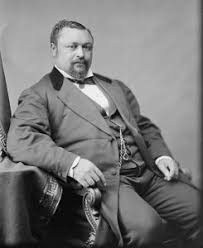
Blanche Bruce
was a Foundational Black American politician who represented Mississippi as a Republican in the United States Senate from 1875 to 1881.
Born into slavery in Prince Edward County, Virginia, he went on to become the first elected Black American senator to serve a full term.
He was appointed as Recorder of Deeds in Washington D.C. during Benjamin Harrison's presidency.
His home, the Blanche K. Bruce House, is a National Historic Landmark.
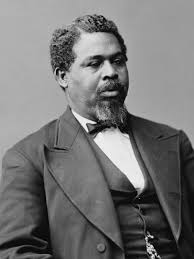
Robert Smalls
was a Foundational Black American politician who was born into slavery in Beaufort, South Carolina.
During the American Civil War, the still enslaved Smalls commandeered a Confederate transport ship in Charleston Harbor and sailed it from the Confederate-controlled waters of the harbor to the U.S. blockade that surrounded it.
Smalls was one of the founders of the South Carolina Republican Party.
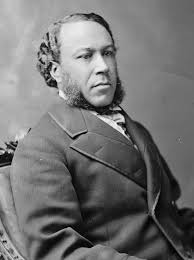
Joseph Hayne Rainey
was a Foundational Black American politician.
He was the first black person to serve in the United States House of Representatives and the second black person to serve in the United States Congress.
His service included time as presiding officer of the House of Representatives.
Born into a family of farmers and planters, Rainey was a member of the Republican Party.
Josiah T. Walls
was a Foundational Black American farmer, lawyer and politician who served all or some of three terms in the United States House of Representatives between 1871 and 1876.
In 1870, Walls was nominated as the Republican candidate for Florida's sole at-large congressional seat after a contentious party convention.
He was one of the first Black Americans in the United States Congress elected during the Reconstruction Era, and the first black person to be elected to Congress from Florida.
He also served four terms in the Florida Senate.
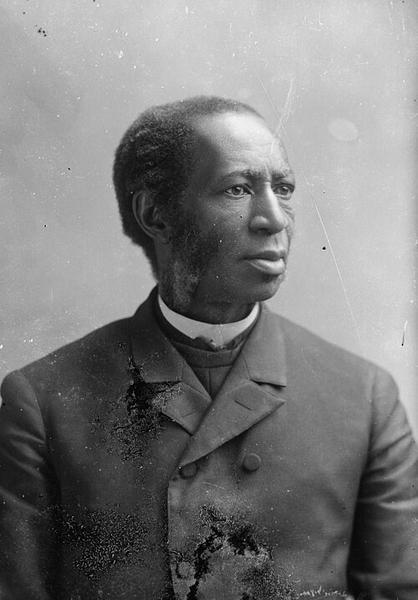
Richard H. Cain
was an American minister, bishop, abolitionist and politician.
After the American Civil War, he was appointed by Bishop Daniel Payne as a missionary of the African Methodist Episcopal
Church in South Carolina. Cain served as a United States representative from South Carolina from 1873 to 1875 and 1877 to 1879.
He also was one of the founders of Lincolnville, South Carolina.
He was elected as a Republican to the 43rd United states Congress in a newly created at-large district.
He was on the Committee on Agriculture, but focused more on the civil-rights bill that eventually passed, in diluted form, in 1875.
He gave noted speeches on the bill in January 1873.
He did not run for re-election in 1874 after redistricting, but ran for the 2nd district in 1876.
He was elected to the 45th United States Congress.
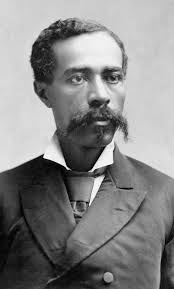
John Roy Lynch
was a Foundational Black American writer, attorney, military officer, author, and Republican politician who served as Speaker of the Mississippi House of Representatives and represented Mississippi in the United States House of Representatives.
Lynch was born into slavery in Louisiana and became free in 1863 under the Emancipation Proclamation.
During Reconstruction, Lynch became a prominent political leader in Mississippi.
In 1873, Lynch was elected as the first Black American Speaker of the Mississippi House of Representatives; he is considered the first Black man to hold this position in any state.
He was among the first generation of Black Americans from the South elected to the U.S. House of Representatives and served in the 44th, 45th, and 47th Congresses.
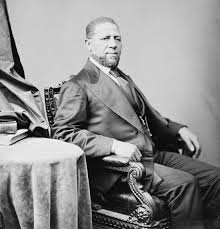
Hiram R. Revels
was a Black American Republican politician, minister in the African Methodist Episcopal Church, and college administrator.
Born free in North Carolina, he later lived and worked in Ohio, where he voted before the Civil War.
Elected by the Mississippi legislature to the United States Senate as a Republican to represent Mississippi in 1870 and 1871 during the Reconstruction era, he was the first Black American to serve in either house of the U.S. Congress.
During the American Civil War, Revels had helped organize two regiments of the United States Colored Troops and served as a chaplain.
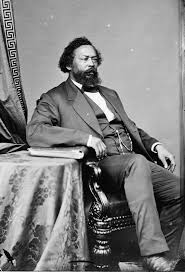
Benjamin Sterling Turner
was a Black American businessman and politician who served in the United States House of Representatives representing Alabama's 1st congressional district in the 42nd United States Congress.
He joined the Republican Party after the Civil War.
In 1867, he attended the Republican state convention and attracted the attention of local GOP officials. That same year he was appointed Dallas County's tax collector.
In 1869, Turner was elected a Selma councilman, but he resigned in protest after being offered compensation because he believed public officials should not be paid when economic conditions were poor.
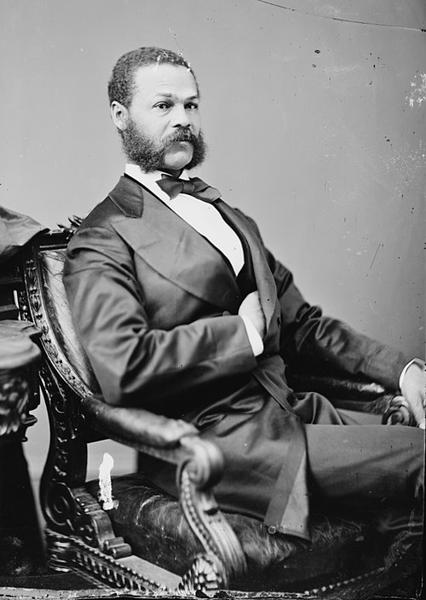
Jefferson Franklin Long
was a Black American U.S. congressman from Georgia.
Long had established himself as a prominent member of the Republican Party in 1867
He was the second Black American sworn into the U.S. House of Representatives and the first Black American congressman from Georgia.
Long was the first Black American Representative to speak on the floor of the U.S. House, opposing the Amnesty Bill that exempted former Confederates serving in the House from swearing allegiance to the Constitution.
He remained the only Black American to represent Georgia until Andrew Young was elected in 1972.
Note: The Republican Party was founded on March 20th 1854 primarily to oppose the expansion of slavery into American western territories.
Foundational Black Americans & The Republican Party
The Radical Republicans were a powerful political faction within the United States Republican Party that drove the complete abolition of slavery and the protection of civil rights for freed people during the American Civil War and Reconstruction.
Core Goals and Beliefs
- Eradication of Slavery: They fought for the permanent end of slavery through constitutional change.
- Civil Rights: They demanded immediate political and social equality, citizenship, and voting rights for Foundational Black American men.
- Strict Reconstruction: They wanted the federal government to strongly reshape Southern society rather than allow a quick or lenient return to pre-war norms.
Key Leaders
- Thaddeus Stevens: A fiery member of the House of Representatives from Pennsylvania who led the faction in Congress.
- Charles Sumner: A senator from Massachusetts who championed civil rights and racial equality from the Senate floor.
- Benjamin Wade: An Ohio senator who helped guide key congressional plans like the Wade-Davis Bill and the Joint Committee on the Conduct of the War.
Major Actions and Legislation
- Clashing with Presidents: They strongly opposed the lenient post-war approaches of Presidents Abraham Lincoln and Andrew Johnson.
- Impeachment: They led the effort to impeach President Andrew Johnson in 1868 after he blocked civil rights laws.
- Reconstruction Acts: They passed the Reconstruction Acts of 1867, which placed the former Confederate states under military control to build new, democratic state governments.
- Constitutional Amendments: They helped create and secure the 14th Amendment (citizenship and equal protection) and the 15th Amendment (voting rights for Foundational Black American men).
Decline
The influence of the Radical Republicans faded in the 1870s as Northern interest waned, federal troops withdrew, and white Southern political control and violent resistance (such as the Ku Klux Klan) reasserted themselves, ending the Reconstruction era by 1877.
The Courts, Foundational Black Americans and The Powers of Congress
The Powers of Congress (Legislative Branch) Making Laws
💵 Financial and Budget Powers
- Tax and Spend: Create and collect taxes, duties, and excises to pay debts and fund the general welfare.
- Borrow Money: Issue bonds and borrow funds on the credit of the United States.
- Regulate Commerce: Control foreign trade, interstate commerce, and trade with Indian tribes.
- Coin Money: Mint currency, set its value, and fix standard weights and measures.
🛡️ Military and Foreign Policy Powers
- Declare War: Hold the exclusive constitutional authority to declare war and grant letters of marque.
- Fund the Military: Raise, finance, and maintain the Army, Navy, and national armed forces.
- Rules for Forces: Make rules to govern and regulate land and naval military forces.
📝 Legislative and Institutional Powers
- Make Laws: Pass all laws necessary and proper for carrying out the functions of government.
- Establish Post Offices: Create postal systems and federal post roads.
- Intellectual Property: Issue patents and copyrights to protect inventors and authors.
- Federal Courts: Create lower federal courts beneath the Supreme Court.
- Naturalization: Set uniform rules for how immigrants become U.S. citizens.
⚖️ Checks and Balances
- Advice and Consent: The Senate approves or rejects presidential treaties and federal nominations (including cabinet officers and Supreme Court justices).
- Impeachment: The House can impeach federal officials, and the Senate holds the trial to convict and remove them.
- Override Vetoes: Re-pass vetoed legislation with a two-thirds vote in both chambers.
Federal Laws Not Upheld For Freedmen
• 14th Amendment of 1868: Protects Foundational Black Americans Equal protection under the law +.
• The Enforcement Act of 1870: Protects against disguised conspiracies on public highways or private property aimed at stopping Foundational Black American Citizens from exercising their rights.
• The Ku Klux Klan Act of 1871: Protects Foundational Black Americans form Targeted paramilitary violence by making it a federal crime.
• Civil Rights Act 1964: Outlaws discrimination against Foundational Black Americans based on race, color, religion, sex.
Recourse:
1. Contact The U.S. Attorney General Office and Demand an Investigation.
2. Contact The FBI Office and Demand an Investigation.
3. Contact Your State Senator & House Rep and Demand that something be done.
Federal Level:
The Attorney General is the chief legal officer and chief law enforcement officer of the United States.
Supervising Law Enforcement:
• The Federal Bearu of Investigation (FBI).
• The United States Marshals Service.
State Level:
The Attorney General is is the chief legal officer of the State and head of the Department of Law of the State Government.
State Duties:
• Enforcing State Laws: Prosecutes criminal activities and public safety violations.
• Protecting Consumers: Fights against harmful business practices.
• State Representation: Initiates civil lawsuits on behalf of state citizens.

Lineage Heritage Delineation
WE ALL WE GOT